
Costa del Sol Hospital – Costa del Sol Hospital has recently inaugurated a state-of-the-art simulation lab aimed at enhancing the practical skills of medical professionals. This innovative facility is designed to provide healthcare staff, students, and residents with hands-on experience in a controlled, safe environment, allowing them to practice complex procedures without risk to patients. Equipped with high-fidelity mannequins, advanced monitoring systems, and interactive training modules, the lab ensures that medical teams can simulate real-world clinical scenarios effectively. According to experts, simulation-based training has been shown to improve patient outcomes, reduce errors, and boost healthcare staff confidence. The launch event was attended by leading medical educators, hospital executives, and local government officials, highlighting the growing emphasis on advanced clinical education. By integrating technology and experiential learning, Costa del Sol Hospital is setting a new standard for medical training in the region, providing a bridge between theoretical knowledge and practical expertise for healthcare professionals.

Innovative Technology Transforming Medical Training
The new simulation lab technology at Costa del Sol Hospital incorporates a variety of high-tech tools that replicate real-life medical situations. This includes robotic mannequins that mimic patient symptoms, surgical simulators for minimally invasive procedures, and virtual reality setups for complex scenarios such as emergency trauma or obstetric complications. These tools allow trainees to experience diverse clinical conditions, ranging from cardiac arrests to respiratory emergencies, in a safe, controlled environment. The lab also integrates electronic health record simulations, enabling students to practice data entry and patient management workflows. Experts suggest that these immersive technologies not only enhance procedural proficiency but also develop critical thinking and decision-making skills under pressure. By investing in cutting-edge simulation equipment, Costa del Sol Hospital ensures that its medical staff remains at the forefront of modern healthcare practices. Studies from sources like the National Center for Biotechnology Information confirm that such training improves both clinical competency and patient safety outcomes.

Enhancing Interdisciplinary Collaboration
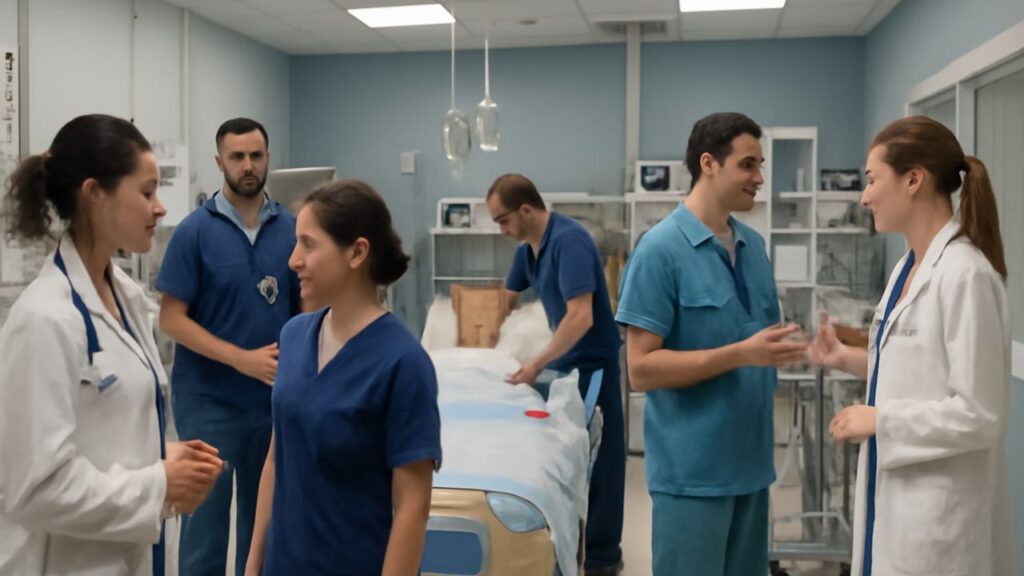
Another significant feature of Costa del Sol Hospital’s simulation lab is its ability to foster interdisciplinary collaboration. Healthcare is increasingly reliant on teamwork, where doctors, nurses, and allied health professionals must communicate and coordinate effectively. The lab provides opportunities for joint training exercises that simulate hospital-wide emergencies or multi-departmental patient care scenarios. By practicing in an environment that closely mirrors real hospital conditions, teams can refine their communication strategies, role assignments, and crisis management skills. Research indicates that interdisciplinary simulation training reduces medical errors and enhances patient safety, particularly in high-pressure situations such as cardiac arrest or trauma cases. The lab’s flexible design also allows for scenario customization, ensuring that specific department needs can be addressed. Costa del Sol Hospital’s approach underscores the importance of collaborative education, equipping healthcare providers with the skills to perform optimally as part of a team in diverse clinical contexts.
Impact on Medical Education and Residency Programs
Medical students and residents at Costa del Sol Hospital now have unparalleled access to a hands-on learning environment that complements traditional classroom instruction. Residency programs are integrating simulation-based modules to teach procedural skills, patient assessment, and emergency interventions. This approach allows residents to practice and repeat procedures until mastery is achieved, which is not always possible in live patient settings. Faculty members also benefit from immediate performance feedback, enabling targeted instruction and skill refinement. Studies published in leading medical education journals show that simulation-based learning accelerates skill acquisition and enhances retention, particularly in surgical and critical care specialties. By offering continuous, experiential learning opportunities, Costa del Sol Hospital ensures that its graduates are better prepared for real-world clinical challenges. This investment in high-quality medical training positions the hospital as a leader in educational innovation and clinical excellence in the region.

Future Plans and Community Impact
Looking ahead, Costa del Sol Hospital aims to expand the simulation lab’s capabilities by incorporating telemedicine simulations, advanced procedural modules, and public health emergency drills. These enhancements will further prepare staff to respond to complex health crises and evolving patient care demands. The hospital also plans to open certain training sessions to partner institutions and regional healthcare providers, creating a collaborative learning network. According to healthcare experts, such initiatives strengthen the overall quality of medical services in the community. Additionally, the hospital expects that the lab will contribute to research in clinical education, providing data on training efficacy and best practices. By prioritizing simulation-based training, Costa del Sol Hospital not only enhances the skills of its healthcare professionals but also directly improves patient safety, care quality, and community health outcomes. For more information on simulation-based clinical training, visit the Association of American Medical Colleges.
