
AI in Patient Care – Artificial Intelligence (AI) is transforming healthcare at an unprecedented pace, and the upcoming seminar at pontealdia.org on “The Role of AI in Patient Care and Hospital Efficiency” will shed light on how this technology is shaping modern hospitals. The seminar aims to bring together medical professionals, researchers, students, and policymakers to discuss the latest advancements in AI-driven diagnostics, predictive analytics, and hospital management systems. With healthcare facing challenges like rising patient loads, shortage of skilled staff, and the need for accurate and timely interventions, AI offers innovative solutions. From streamlining administrative tasks to enhancing precision in medical imaging and improving decision-making for critical care, the potential is vast. The session will highlight real-world examples where AI applications are already improving patient outcomes and operational efficiency in hospitals across the globe. According to a report by the World Health Organization, AI adoption in healthcare is expected to expand significantly, making this seminar both timely and essential.
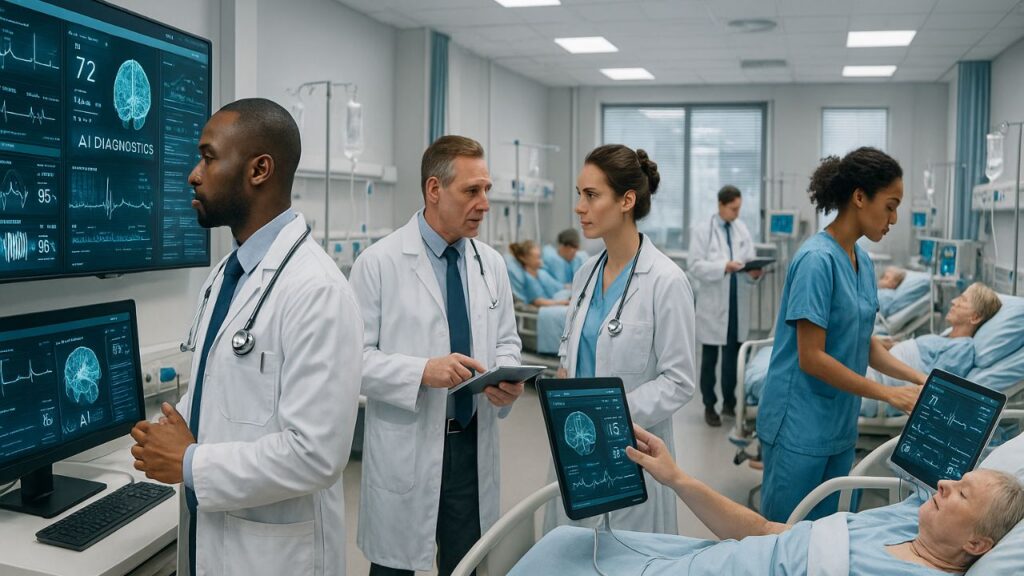
AI in Diagnostics and Personalized Patient Care
One of the most significant contributions of AI in healthcare is its role in diagnostics and personalized patient care. AI-powered tools, such as deep learning algorithms, are being used to analyze complex datasets from electronic health records, lab reports, and medical imaging. This allows doctors to identify diseases earlier and with greater accuracy. For instance, studies published in Nature Medicine have shown that AI models can outperform human radiologists in detecting conditions like breast cancer from mammograms. Personalized medicine, where treatment is tailored to an individual’s genetic makeup and lifestyle, is another area being revolutionized by AI. Predictive algorithms can forecast patient responses to specific drugs, reducing trial-and-error in treatments and minimizing side effects. By integrating AI into daily practices, healthcare professionals can provide more patient-centric care, leading to better outcomes and higher satisfaction. The seminar will explore these applications with case studies from leading hospitals worldwide.
Boosting Hospital Efficiency Through AI Integration
Beyond patient care, AI plays a crucial role in boosting hospital efficiency. Healthcare institutions are often burdened with administrative overheads, staff shortages, and high patient inflows. AI-enabled systems can optimize scheduling, streamline billing processes, and manage patient flow more effectively. For example, AI chatbots are increasingly being used to handle routine queries, freeing medical staff to focus on critical care. A study highlighted by Harvard Business Review suggests that hospitals using AI-driven resource allocation tools have reduced patient wait times and improved bed management. AI can also analyze supply chain data to predict shortages in medical supplies and ensure timely procurement. By reducing inefficiencies and administrative errors, hospitals can lower costs while maintaining high standards of care. The seminar will provide insights into how AI-driven operational models are being adopted by both public and private healthcare systems globally.
Ethical Considerations and Challenges of AI in Healthcare
While the benefits of AI in healthcare are immense, ethical considerations and challenges must not be overlooked. Issues such as patient data privacy, algorithmic bias, and the transparency of AI decision-making systems need careful regulation. According to Brookings Institution, the improper use of AI tools could lead to unintended consequences, including misdiagnosis or inequitable access to treatment. Ensuring that AI models are trained on diverse datasets is critical to avoid biases that could negatively affect vulnerable populations. Furthermore, the responsibility of final medical decisions must remain with qualified healthcare professionals, with AI serving as an assistive tool rather than a replacement. These challenges underscore the need for robust policies and governance frameworks. The seminar will dedicate a special session to these ethical aspects, ensuring that participants understand both the potential and the pitfalls of AI adoption in healthcare.
Future Prospects and the Role of Healthcare Professionals
The future of AI in healthcare looks promising, but its successful implementation depends on the collaboration of technology developers, healthcare professionals, and policymakers. Continuous training for doctors, nurses, and administrators is essential to ensure they can effectively use AI tools. Initiatives by organizations such as the World Economic Forum emphasize the importance of reskilling healthcare workers to adapt to AI-driven environments. The integration of AI also opens up new career opportunities in medical data science, bioinformatics, and healthcare analytics. Hospitals that embrace AI stand to become more resilient, efficient, and patient-friendly in the long run. The seminar at pontealdia.org will conclude with a forward-looking panel discussion, highlighting future research directions, industry collaborations, and government initiatives that will shape the next era of healthcare. By attending, participants will gain a comprehensive understanding of how AI can be leveraged to achieve sustainable improvements in both patient care and hospital efficiency.


