
Innovation Spotlight – In recent years, the healthcare sector has been revolutionized by the integration of advanced digital tools, with one of the most promising innovations being Digital Twin Technology. In the context of intensive care units (ICUs), this technology allows clinicians to create real-time, virtual replicas of patients, enabling a continuous flow of data between monitoring devices and predictive models. This not only provides doctors and nurses with a deeper understanding of patient conditions but also enhances decision-making during critical situations. For hospitals such as Costa del Sol and others across Europe, embracing digital twin systems in ICU monitoring is part of a broader push toward smart healthcare solutions that improve patient outcomes and operational efficiency. According to recent reports by the European Commission, the integration of digital health technologies plays a crucial role in modernizing healthcare infrastructures and ensuring more personalized care delivery. By adopting these cutting-edge practices, institutions can better anticipate complications, allocate resources more effectively, and ultimately save more lives.
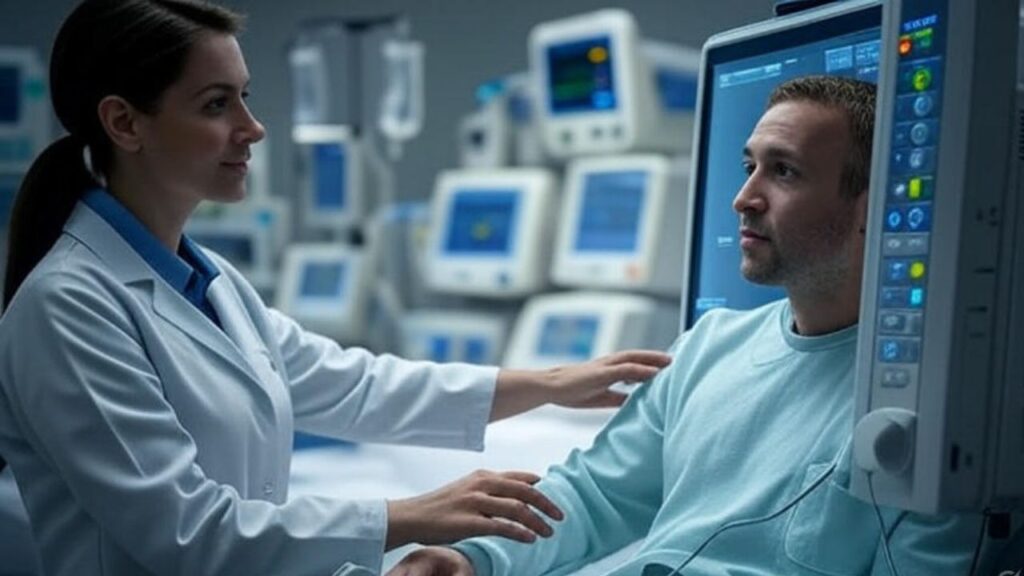

How Digital Twin Technology Enhances ICU Monitoring
The adoption of digital twin technology in ICU monitoring represents a significant leap forward in clinical care. By using sensors, medical imaging, and electronic health records, a dynamic virtual model of the patient is continuously updated. This enables healthcare professionals to observe both the current status and predictive trajectories of vital functions such as heart rate, blood pressure, and oxygen saturation. Unlike traditional monitoring systems that provide reactive data, digital twins offer a proactive layer of intelligence, alerting staff to potential complications before they arise. Hospitals that have piloted this technology, as highlighted by research from the IEEE Xplore Digital Library, report improvements in patient safety and faster response times. For institutions like those featured on pontealdia.org, this means an opportunity to lead in innovation while ensuring that frontline medical teams are empowered with real-time, actionable insights.

Benefits for Patients, Clinicians, and Hospital Operations
Digital twin technology is not limited to improving patient monitoring; its benefits extend across the entire healthcare ecosystem. For patients, it ensures more precise and personalized care plans, with interventions tailored to their unique physiological responses. Clinicians, meanwhile, can rely on predictive analytics to guide treatment decisions, reducing cognitive overload and enhancing diagnostic accuracy. At an organizational level, hospitals benefit from streamlined resource management, better ICU bed utilization, and more efficient staff deployment. A report by Deloitte on healthcare digital transformation emphasizes that digital twin systems contribute to lowering medical errors and optimizing workflows. For institutions like those collaborating with pontealdia.org, these benefits align with broader objectives of quality improvement and patient-centered service delivery. In the long run, such investments not only raise care standards but also build trust among communities that depend on reliable healthcare services.
Challenges in Implementing Digital Twin Systems in ICUs
While the promise of digital twin technology is undeniable, implementation within ICUs faces several challenges. First, there are significant costs associated with acquiring advanced sensors, software platforms, and integrating them with existing electronic medical record systems. Second, data privacy and cybersecurity remain critical concerns, particularly when handling sensitive patient health data. A report from the World Health Organization underscores the importance of ensuring strong governance frameworks for digital health adoption, especially in hospitals. Additionally, staff training and change management are essential, as frontline professionals must adapt to new digital workflows. Resistance to change, combined with limited IT infrastructure in certain regions, can slow down deployment. Despite these challenges, many hospitals are finding that phased implementation and pilot projects help to gradually overcome barriers while demonstrating the tangible benefits of this innovation in ICU care.

The Future of ICU Monitoring with Digital Twin Innovation
Looking ahead, the integration of digital twin technology in ICU monitoring is expected to expand rapidly, driven by advancements in artificial intelligence, cloud computing, and the Internet of Medical Things (IoMT). Experts predict that future ICUs will function as highly connected environments where digital twins not only monitor patients but also simulate different treatment scenarios, allowing doctors to test interventions virtually before applying them in real life. This approach could significantly reduce risks and improve recovery rates. According to McKinsey & Company, digital twins are projected to play a central role in next-generation healthcare delivery models worldwide. For hospitals featured on pontealdia.org, adopting this innovation could position them at the forefront of modern medicine, setting a benchmark for other institutions. Ultimately, the vision is clear: a healthcare system where technology works seamlessly with human expertise to deliver safer, faster, and more personalized care to every patient in need.
